
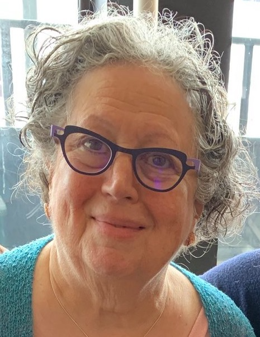
 Ellen trained in Amherst with Dr. Moshe Feldenkrais. Her lifelong interest in body movement, the eyes, and sensory awareness was initially inspired by her mother who became progressively deaf and blind. While editing the Alexander Yanai volumes Ellen realized that Dr. Feldenkrais found the experiential sensory patterns that correlate to complex neurological insights. He translated those insights into direct accessible movements and sensations without resorting to anatomical or neurological terminology. Her extensive study with Moshe’s original assistants reinforced the concept of using simple, primary language to describe intricate levels of coordination. Currently Ellen is interested in finding a bridge between Dr. Feldenkrais’s use of primary language and the more complex language used in science.
Use of the Eyes 101++
This workshop explores the visual phenomena of convergence and focal length—and their relationship to balance, posture, and the Feldenkrais Method®.
During this workshop, you will explore:
- Defining Convergence and Focal Length
- How changes in the eyes’ ability to converge—especially when combined with changes in focal length—can affect balance.
- How the dominant eye may influence which foot becomes the primary “standing leg,” as well as the position of the head over the torso.
- How applying a few basic principles from the ATM® eye lessons can make your Functional Integration® lessons more effective.
Please bring: a blindfold, two eye patches or a scarf to use during the workshop.